.svg)


Internet Cafe Business Plan: Getting Started
Want to open your own gaming venue but don’t know where to start? If you’re serious about launching your own business, it’s essential to go through all the necessary preparation steps. The first step is thorough planning and a well-structured business plan.
The goal of a business plan is to ensure you clearly understand:
- initial investments
- your target audience
- operational costs
- potential risks and challenges
Having all this information in front of you gives you a realistic picture of what to expect.
Additionally, if you’re planning to attract investors, take your business plan seriously — it can determine whether someone is willing to invest in your project or not. In this guide, you’ll find everything you need to get started.
Introduction
So, why do you need a detailed business plan?
Starting any business is a complex process, especially in a competitive environment. A business plan is designed to simplify both the launch and day-to-day operations of your gaming venue.
While developing it, you should:
- gather as much data as possible
- analyze pros and cons
- choose the most suitable business model and structure
It’s crucial to consider:
- the cost of opening a gaming venue
- the equipment you’ll need to invest in
- staff salaries and operational expenses
You should also explore and evaluate different marketing strategies that align with your target audience.
This guide is designed to give you practical insights on where to start and how to scale your gaming business successfully.
Gaming Venues: Industry Overview
Internet cafes have been around for a long time, and they’re not going anywhere anytime soon. In the early days of the internet, people who couldn’t afford a home connection relied on these cafes for access. Back then, they were simple spaces with just a few computers, mainly used for browsing or sending emails.
Today, gaming venues have evolved far beyond that.
Modern computer clubs offer:
- a комфортable, атмосферний environment
- high-performance gaming equipment
- a social space for players
Games are becoming increasingly demanding in terms of hardware, so it’s no surprise that many gamers can’t keep up with constant upgrades at home. This is one of the key reasons why gaming venues remain highly relevant.
A Flexible and Creative Business Model
The gaming venue industry offers a lot of room for creativity. These spaces can vary significantly in:
- design
- format
- services offered
For example:
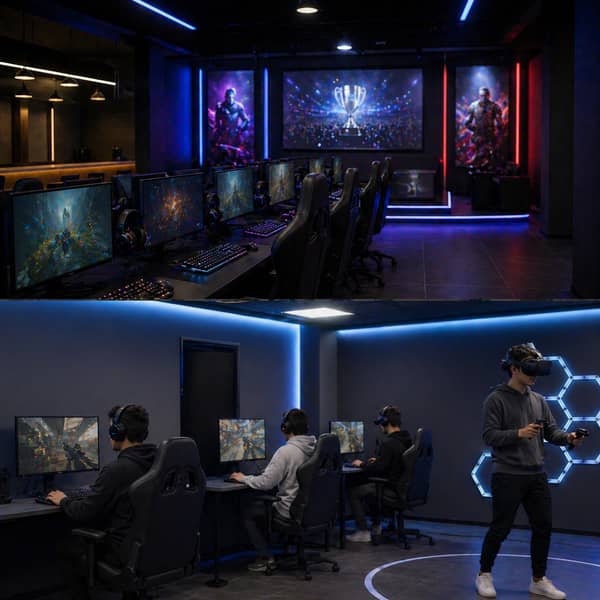
- a standard internet cafe can be transformed into a premium esports venue hosting tournaments
- it can also become a training hub where players improve their skills across PC, console, or even VR gaming
Who Starts Gaming Venues?
People interested in launching gaming venues generally fall into three main categories:
1. Gaming Enthusiasts
These are passionate gamers who want to turn their hobby into a business.
They typically:
- understand hardware and gaming trends
- know what players need
- start with smaller budgets and scale over time
2. Beginners with Limited Budget
This group is less familiar with the gaming industry.
They often:
- see gaming venues as a profitable opportunity
- underestimate the complexity of the business
- need time to learn the market and operations
3. Investors
These are entrepreneurs focused on investment rather than gaming itself.
They usually:
- have little or no experience in gaming
- invest significant capital from the start
- launch large-scale venues
- organize tournaments early on
Key Takeaway
Regardless of which category you belong to, having a well-structured business plan is essential.
This guide is designed to help you build a strong gaming venue business plan — whether you have prior experience or are starting from scratch.
Pros and Cons of Opening a Gaming Venue
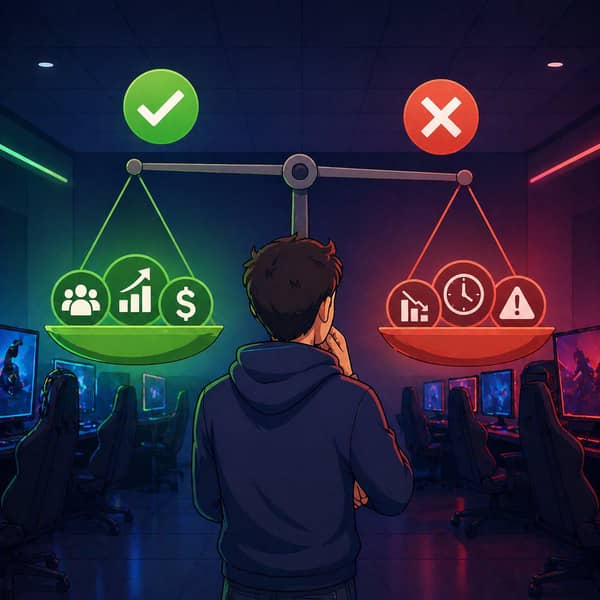
The first thing you should do before starting any business is make sure you clearly understand its pros and cons. Take time to identify the key advantages and disadvantages — this will help you decide whether the business is worth your effort.
Even within the same niche, such as gaming venues, pros and cons can be perceived differently. What is an advantage for one person may be a drawback for another. Keeping this in mind, here are the most common pros you should consider.
Pros
Low Startup Costs
Opening a gaming venue can require relatively moderate initial investment. The largest share of costs goes toward purchasing PCs and consoles.
On average, you may need around $50,000 to start, which is relatively low compared to many other businesses.
Low Competition
Internet cafes were extremely popular in the past when home internet access was limited. Today, gaming venues are focused on gamers, offering immersive environments and high-end equipment.
Demand for this format has grown in recent years, but in many locations, supply still hasn’t caught up — giving you a strong opportunity to stand out.
Multiple Revenue Streams
A gaming venue can offer much more than just gaming time.
Additional services may include:
- printing and scanning
- document photo services
- snacks and beverages
These services require minimal investment but can significantly increase your overall revenue and keep customers on-site longer.
Fast Return on Investment
Gaming venues can offer relatively quick payback periods.
- Average ROI: ~12 months
- With strong planning: break-even in as little as 9 months
Discounts and Partnerships
You may gain benefits by partnering with:
- game developers
- hardware manufacturers
These partnerships can reduce costs or provide additional perks.
Community Building
Running a gaming venue allows you to build strong relationships with your local community.
Benefits include:
- a loyal customer base
- networking opportunities
- easier promotion for future projects
Word-of-Mouth Marketing
One of the biggest advantages of gaming venues is their ability to grow through recommendations.
You can amplify this by:
- offering referral bonuses
- rewarding customers who bring friends
Simple Business Model
If you’re new to business, this is a major advantage.
Gaming venues typically:
- have straightforward operations
- follow proven models
- allow you to start without prior experience
With proper planning and a solid business plan, success is achievable even for beginners.
Cons of Opening a Gaming Venue
Now let’s look at the potential downsides of starting a gaming venue business. Understanding these risks in advance will help you prepare and make better decisions.
Limited Scalability
If your goal is gradual business scaling, gaming venues can be somewhat ограничены in this regard.
Growth options typically include:
- launching a franchise model
- building a network of venues across cities or countries
However, scaling a single location is not enough — long-term growth usually requires opening multiple venues.
Constant Management Required
A gaming venue requires continuous oversight and communication with staff to ensure smooth operations.
Common challenges include:
- unexpected issues (technical or operational)
- constant monitoring of equipment
- staff coordination
At the early stage, you’ll need to be highly involved to understand what works and what doesn’t.
Many owners solve this with management platforms like SENET, which:
- automate routine tasks
- provide real-time monitoring
- allow remote control of operations and finances
Equipment Wear and Tear
Hardware is the core of your business.
Challenges include:
- heavy daily usage of PCs and consoles
- regular technical issues
- ongoing maintenance and repairs
You’ll need to:
- upgrade gaming hardware every few years
- replace peripherals (mice, keyboards, headsets) much more frequently
Monitoring tools can help — for example, SENET includes CPU/GPU temperature tracking, which helps detect overheating and prevent failures.
Supplier Reliability
Finding reliable suppliers can be challenging.
Risks include:
- inconsistent product quality
- delivery delays
- unreliable partners
This is a common issue across many industries, not just gaming venues, but it still requires careful planning and vetting.

Core Services
Your gaming venue may offer multiple services, but it’s important to define a core offering that ties everything together.
For example:
- an internet cafe targeting office workers may focus on the fastest internet in the area
- an esports venue may focus on high-end gaming equipment that most users don’t have at home
You should develop a clear unique value proposition (UVP) and build your entire marketing strategy around it.
When defining your core service, always keep your target audience in mind. Your goal is to:
- meet their needs
- solve their problems
- fulfill unmet expectations
It’s also important to ensure there is enough demand in your area.
For example, if gamers in your region don’t have access to local tournaments, your venue can fill that gap by:
- providing tournament-ready infrastructure
- offering premium hardware
- creating a dedicated space for practice and competition
Additional Services
If you want to maximize revenue, you should diversify your income streams with additional services.
Here are some popular options:
- gaming bootcamps and training sessions
- dedicated board game areas
- private streaming rooms
- snacks and beverages
- esports team merchandise
- rental of private rooms or conference spaces for events
- printing and scanning services
- ID photo services and on-site photo printing
These are just some of the additional services offered by users of SENET in their gaming venues.
Based on their experience:
- most additional services require minimal investment
- they don’t require major changes to your setup
- they can be easily tested and scaled
This flexibility allows you to continuously experiment and adapt your offering based on what your audience values most.
Pricing Strategy
Pricing is one of the most challenging parts of your business plan, as it can be difficult to determine the right price point for your services.
To simplify the process:
- Analyze competitors in your local area to understand market benchmarks
- Calculate your own costs, which may differ significantly depending on your investment level
A smart approach is to implement flexible pricing tailored to different customer segments.
Many gaming venues use:
- hourly pricing tiers (based on session length)
- weekday vs. weekend pricing
- loyalty-based pricing (frequent visitors get better rates)
You should also:
- offer special deals for new customers
- provide discounts for returning users
- build a reward and bonus system into your pricing model
This helps increase retention and encourages repeat visits.
Competitor Analysis
You can’t build a business in isolation — competitor analysis is essential.
You need to understand:
- what services your competitors offer
- what customers say about them
- what they do well
- what they are missing
This step is critical for defining your unique value proposition (UVP).
Positioning Your Gaming Venue
After analyzing competitors, focus on your own positioning.
Based on your research, your gaming venue can stand out through:
- Fast and stable internet connection
- Comfortable environment (temperature, furniture, ventilation)
- High-end gaming equipment (PCs, consoles, monitors, headsets, peripherals)
- Licensed software and games (including tools like Adobe or Microsoft Suite for broader use cases)
- Smart pricing strategy with discounts, bonuses, and special offers
- Efficient staff management (scheduling, flexibility, compensation)
- Clear scaling and growth plans
Gaming Venue Business Plan Overview
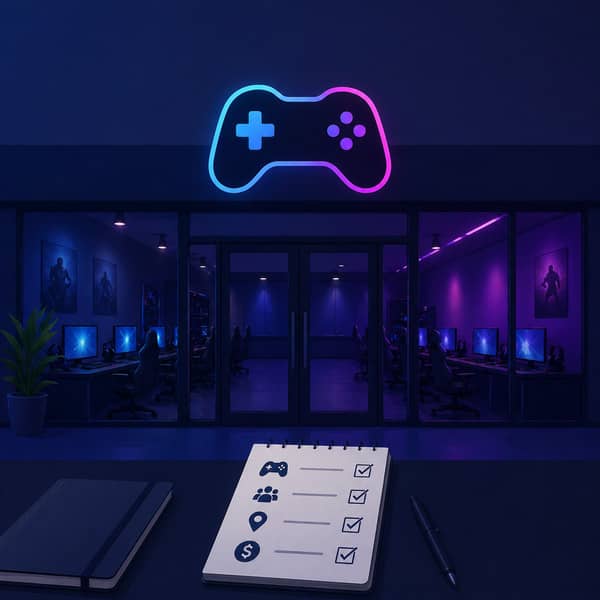
A business plan template can come in different formats, but the core principles remain the same regardless of how you present it. Below are the key elements that should be included in your gaming venue business plan.
Gaming Venue Name
Choosing the right name is essential. It should:
- help you stand out from competitors
- reflect your brand and concept
- be easy to spell and pronounce
Make sure to check that no competitors are using the same or a similar name.
Business Model
Entrepreneurs who want full creative freedom usually avoid franchise models. However, if you prefer a more structured and proven approach, you can consider buying a franchise.
Benefits of a franchise:
- saves time
- reduces risk and stress
- provides a ready-to-use business model
However, keep in mind:
- you may face limitations in decision-making
- you must carefully choose your franchise partner
Business Structure
While gaming venues may look similar externally, their internal structures can vary significantly.
You need to define:
- your legal business structure
- taxation model
- required licenses and permits
Make sure you comply with local laws and regulations to avoid legal issues.
Concept and Mission
This section defines the core idea behind your business.
You should clearly state:
- your mission
- the value you bring to customers
Depending on your goals, your concept may include:
- providing the most stable internet connection in your area
- creating a safe and inclusive space for specific audiences
- combining multiple concepts into one offering
Market Demand
Every business must solve a problem or fulfill a need.
For example:
- lack of private space for gaming at home
- need for social interaction
- access to tournaments and competitive play
Your gaming venue can provide:
- a distraction-free environment
- a social hub for like-minded players
- a platform for esports participation
Talk to people in your area to identify real needs and include them in your business plan.
Services
Your services should directly address the needs you’ve identified.
For example:
- demand for fast internet → offer high-speed access and PC time
- demand for gaming → provide high-end equipment and immersive experience
- demand for esports → create a competitive gaming environment
Target Audience
Defining your target audience is one of the most important parts of your business plan.
You need to understand:
- who your core customers are
- what they need
- how they behave
Typically, gaming venues attract:
- younger audiences
- students
- gamers
However, your audience may vary.
For example:
- if your audience is older, you might consider offering additional services like food or beverages
- if your venue is located near a school, alcohol sales may be restricted or prohibited
Gaming Venue Setup Requirements
Your business plan should include a detailed list of the tools, resources, costs, and suppliers required to launch and operate your gaming venue.
Here is a basic checklist:
- licenses and legal permits required by local authorities
- location and interior design
- ventilation and air conditioning systems
- internet providers and networking equipment
- gaming venue management software (e.g., SENET)
- gaming furniture (desks, chairs)
- computer setups and consoles
- software licenses
- staff hiring and management
- kitchen or bar equipment (if offering food and drinks)
Franchise Considerations
If you decide to launch your gaming venue through a franchise, many of these aspects will be guided or handled by the franchisor.
Typically, franchise venues must:
- follow standardized interior design guidelines
- use specific hardware configurations
- comply with brand requirements
It’s important to carefully review all franchise terms to clearly understand:
- what decisions you can control
- what elements must remain unchanged

Marketing Analysis and Strategy
No business plan is complete without a solid marketing analysis and a clear strategy. You can’t build a successful business without understanding the market — relying on luck is not a strategy. Proper market analysis helps minimize risks and gives you confidence in your decisions.
Market Analysis
The importance of market analysis cannot be overstated. This part of your business plan plays a critical role in determining your success.
You should:
- spend time researching the gaming venue market
- analyze trends and how they evolve over time
While you can conduct research, many business owners choose to work with professional marketers to obtain accurate and reliable data.
Using PESTLE Analysis
If you decide to conduct research on your own, one effective method is PESTLE analysis. It evaluates:
- Political factors – regulations, stability, local policies
- Economic factors – is the market financially viable?
- Social factors – is there enough demand in your area?
- Technological factors – availability of reliable internet providers and infrastructure
- Legal factors – compliance requirements
- Environmental factors – local conditions affecting operations
For example:
- Is the local economy strong enough to support a gaming venue?
- Are there enough potential customers in your area?
- Do you have access to reliable internet providers?
As you answer these questions, more insights will emerge. Since conditions can change quickly, always rely on up-to-date data, especially regarding economic and political factors.
Market Trends and Customer Needs
Understanding trends is just as important as analyzing the market itself.
Target Audience Trends
Gaming venues typically attract people with free time, especially:
- students
This makes younger audiences one of the most promising segments.
To validate demand, consider:
- do your potential customers prefer gaming or consuming short-form content?
- how engaged are they with gaming culture?
These insights will help you decide whether your location is suitable.
Key Market Trends
One of the strongest trends today is the demand for:
- socialization
- entertainment-driven experiences
Modern gaming venues often expand beyond gaming by offering:
- board games
- arcade machines
- snack bars or drink options (with or without alcohol)
If you want to stand out, creativity is essential. Your venue should offer a unique atmosphere and experience, not just computers.
Data-Driven Approach
When analyzing market needs and trends, use:
- industry reports
- gaming statistics
- reliable online sources
Your business plan should always be based on real data, not assumptions.
Also, consider related industries such as:
- esports
- streaming and content creation
- gaming hardware
- entertainment
Marketing Strategy
Your business plan should clearly outline your marketing strategy. Promoting a gaming venue requires significant effort — especially at the beginning, when no one knows about your brand.
While the process can be challenging, there are proven approaches that can help you attract your first customers and build awareness.
Key Marketing Actions
Here are some effective strategies you can implement:
- Grand Opening Event
Host a launch party where people from your community can: - explore your venue
- try your services
- enjoy free sessions or large discounts
- Digital Advertising
Depending on your budget, promote your venue through: - social media platforms
- search engines
- online communities
- Social Media Presence
It’s essential to actively promote your venue across multiple platforms, not just one.
Your audience is already there — you need to meet them where they spend time. - Offline Promotion
Even though it may seem outdated, offline marketing still works: - distribute flyers
- promote near schools, universities, and popular hangout spots
- Pre-Launch Audience Building
Encourage people to subscribe before your opening: - offer discounts or bonuses
- build an email list early
- Loyalty and Referral Programs
Create incentives for repeat visits: - reward returning customers
- offer bonuses for referrals
Strategy Focus
No matter which tactics you choose, everything should revolve around your target audience.
Gaming venues are typically visited by:
- younger audiences
- students
- active social media users
That’s why digital channels — especially social media — play a crucial role in your growth.
At the same time, combining online and offline strategies will give you the best results.
Conclusion
Anyone serious about opening a gaming venue should start with a detailed business plan.
A strong business plan should:
- answer as many operational questions as possible
- outline realistic expectations
- identify potential risks
It’s also a key tool for attracting investors who need clear and structured information before committing.
Avoid unrealistic assumptions — your plan should be based on real data and honest analysis. Identifying weaknesses early will help you prepare for challenges and reduce risks.
Finally, always rely on relevant and up-to-date information, as economic, social, and political factors can significantly impact your business.
A well-structured business plan is one of the most important steps toward successfully launching and growing your gaming venue.